

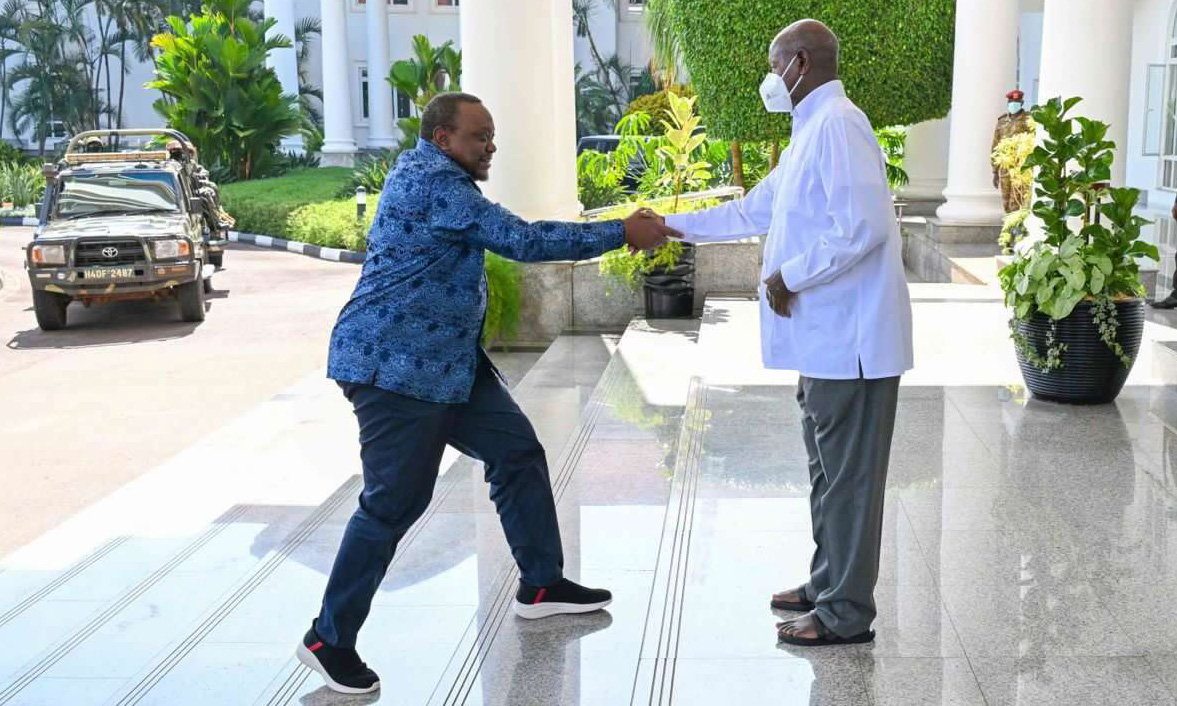
Since leaving office in 2022, former President Uhuru Kenyatta has emerged as one of Africa’s most trusted leaders in promoting democracy, resolving conflicts, and leading election observation missions across the continent.This has made him a true statesman .
Unlike many former heads of state who retreat from public life after leaving office, Mr Kenyatta has remained highly visible on international platforms, representing African institutions in matters of elections, peace, and governance.
This week, he arrived in Addis Ababa, Ethiopia, to lead the African Union Election Observation Mission (AUEOM) during the country’s general election. The poll is considered one of the continent’s most significant political events due to Ethiopia’s role as the headquarters of the African Union and one of Africa’s most influential nations.
Speaking after arriving in Ethiopia, Mr Kenyatta urged African countries to strengthen democracy using homegrown solutions instead of relying on systems imported from foreign nations.
“Our situations are unique. We do not need to copy and paste systems from other parts of the world. We can create and promote African best practices as part of African solutions to African problems,” he said.
The remarks reflect a position he has consistently advocated since leaving office — that Africa has the capacity to solve its own challenges through its institutions and shared experiences.
Mr Kenyatta’s profile in election matters grew even further in 2024 when he was appointed to lead the African Union observer mission during South Africa’s general election.
That election made history after the ruling African National Congress (ANC) lost its parliamentary majority for the first time since the end of apartheid in 1994.
Earlier, in 2023, he led the African Union observer mission during Nigeria’s presidential election that brought President Bola Ahmed Tinubu to power.
In the same year, he also headed the East African Community (EAC) observer mission during elections in the Democratic Republic of Congo.
These assignments have strengthened his status as one of the most trusted leaders by regional and continental institutions in overseeing democratic processes.
Beyond elections, however, his contribution has also extended to peacebuilding efforts. For several years, Mr Kenyatta has played a leading role in efforts to restore peace in eastern Democratic Republic of Congo, a region that has experienced armed conflict for decades.
As the East African Community facilitator in the Congo peace process, he has led negotiations aimed at bringing together the Congolese government, rebel groups, and regional stakeholders in search of a lasting solution to the conflict.
Political analysts say his current role has transformed his image from a national leader into an influential continental diplomat.
According to the analysts, his ability to work with leaders from different countries, combined with his ten years of experience leading Kenya, has earned him considerable respect in African political circles.
While in Ethiopia, Mr Kenyatta said the country’s election carries significance beyond its borders because Ethiopia hosts the African Union and serves as a major diplomatic hub for the continent.
More than 54 million Ethiopians have registered to vote in the election, which seeks to elect members of parliament and regional government leaders. The African Union has deployed observers from 30 African countries to monitor the process.
Mr Kenyatta said the role of election observers is not only to assess whether voting is conducted fairly and transparently, but also to help African nations learn from one another’s experiences.
“The African Union observes elections across the continent with the aim of strengthening democracy through learning from each other,” he said.
The statement reflects his vision of an Africa that is self-reliant in strengthening democratic institutions without depending on external influence.







Leave a comment