

For many years in Luhyaland, we have witnessed the same political script. Every year, during the memorial of the late Wamalwa Kijana, leaders gather at his graveside, hold hands, and declare that the Luhya community is united. They pledge to speak with one voice and chart a common political path.
Yet, within days, those same leaders are back in the public arena criticizing one another, exchanging political attacks, and pursuing different agendas. The unity displayed at the memorial often fades as quickly as it appeared, leaving many people disappointed and questioning its sincerity.
If history has taught us anything, it is that leadership cannot be manufactured through symbolic ceremonies.
President William Ruto did not become the political leader of the Kalenjin community by standing at the grave of Daniel arap Moi holding hands with fellow politicians. His leadership evolved through years of political engagement, organization, and public acceptance.
Similarly, the late Raila Odinga did not become the undisputed political voice of the Luo community through ceremonies at the grave of his father, Jaramogi Oginga Odinga. His influence grew over decades because people embraced his vision and leadership.
Former President Uhuru Kenyatta also did not rise to prominence by gathering leaders at the grave of Mzee Jomo Kenyatta. His political standing developed over time as he earned the confidence of many within his community and across the country.
That is how leadership has always emerged. Ultimately, it is the people who decide. No leader can be created by a photograph, a handshake, or a declaration made during a memorial service.
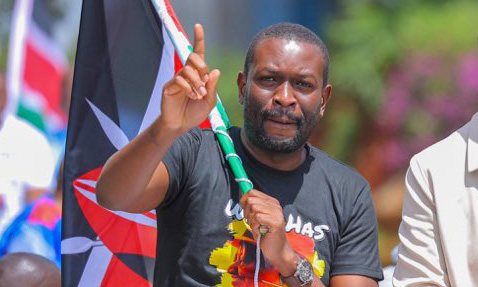
Today, a similar political evolution appears to be taking place in Luhyaland with Edwin Sifuna. Whether one agrees with his politics or not, his influence continues to expand across the region. His growing prominence is not the result of anyone formally crowning him as the community’s leader. Rather, it reflects the fact that more people are listening to him, supporting his message, and increasingly viewing him as one of the region’s leading political voices.
For this generation, leadership may emerge differently from the past. Rather than being shaped by carefully staged declarations of unity, it is likely to be determined by public confidence, consistent political engagement, and the ability to connect with people’s aspirations. By that measure, Edwin Sifuna is steadily emerging as one of the prominent Luhya leaders of his generation. And judging by his political trajectory, his ambitions appear to extend beyond regional influence toward a much larger role on Kenya’s national political stage.













Leave a comment