

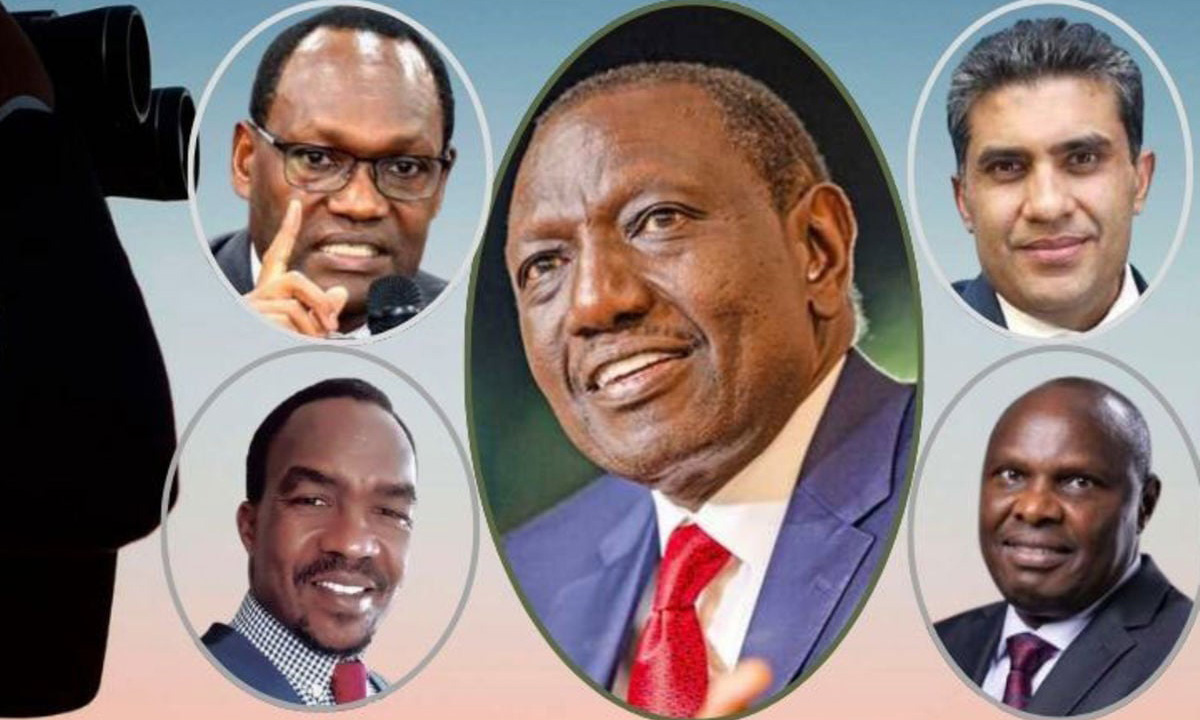
The High Court has declined to dismiss a lawsuit alleging that senior government officials were involved in plans to procure a secret digital application intended to monitor opposition leaders, suppress criticism of the government on social media, and enhance the public image of President William Ruto’s administration.
In its ruling, the court said the allegations are serious and deserve a full hearing rather than being dismissed at the preliminary stage of the proceedings.
The court rejected separate applications filed by Treasury Principal Secretary Chris Kiptoo, Head of Public Service Felix Koskei, Attorney General Dorcas Oduor, and businessman Jayesh Saini, who had sought to have their names removed from the suit. The case was filed by software developer Mary Wachuka and her company, Jipe Inc., seeking KSh 291 million in damages.
As a result of the ruling, the commercial case will proceed to full trial. At the center of the dispute are claims that senior government officials commissioned the development of a confidential digital communications platform but later abandoned the project, allegedly causing Ms. Wachuka substantial financial losses.
All the defendants have denied the allegations, maintaining that no valid contract ever existed between them and the plaintiff.
According to court documents, Ms. Wachuka claims that in late 2023 she was approached to develop the digital platform following discussions with Eric Ng’eno, who was then President William Ruto’s speechwriter.
She says she later signed an agreement with a U.S.-based technology company, Tesxo, to develop the system under a confidential project code-named “Numera 2023.”
Ms. Wachuka alleges that the government failed to honor its financial commitments, leaving her unable to pay the contractor and exposing her to penalties for breach of contract.
She further claims she was informed that the project would be financed through confidential funds from the National Treasury and that businessman Jayesh Saini would oversee the disbursement of the funds due to the sensitive nature of the project.
The defendants have denied these claims.
The court ruled that the inclusion of Mr. Kiptoo and Mr. Koskei in the suit is necessary because the allegations against them relate to actions—or alleged failures to act—that are said to have influenced the plaintiffs’ decision to undertake the project.
“The presence of the first and second defendants will enable the court to determine whether the Government of Kenya, through its officials, made representations that induced the plaintiffs to take actions that ultimately caused them financial loss,” the court stated.
The judge emphasized that, at this stage, the court was not determining whether the plaintiff’s allegations were true but only whether they raised issues that warrant a full trial.
The court further noted that the principles of justice require both parties to be heard and that the dispute should be resolved after considering all the evidence presented.
After reviewing Ms. Wachuka’s pleadings and supporting evidence, including WhatsApp communications, the judge concluded that the plaintiffs had presented sufficient grounds for the case to proceed to a full hearing.













Leave a comment