

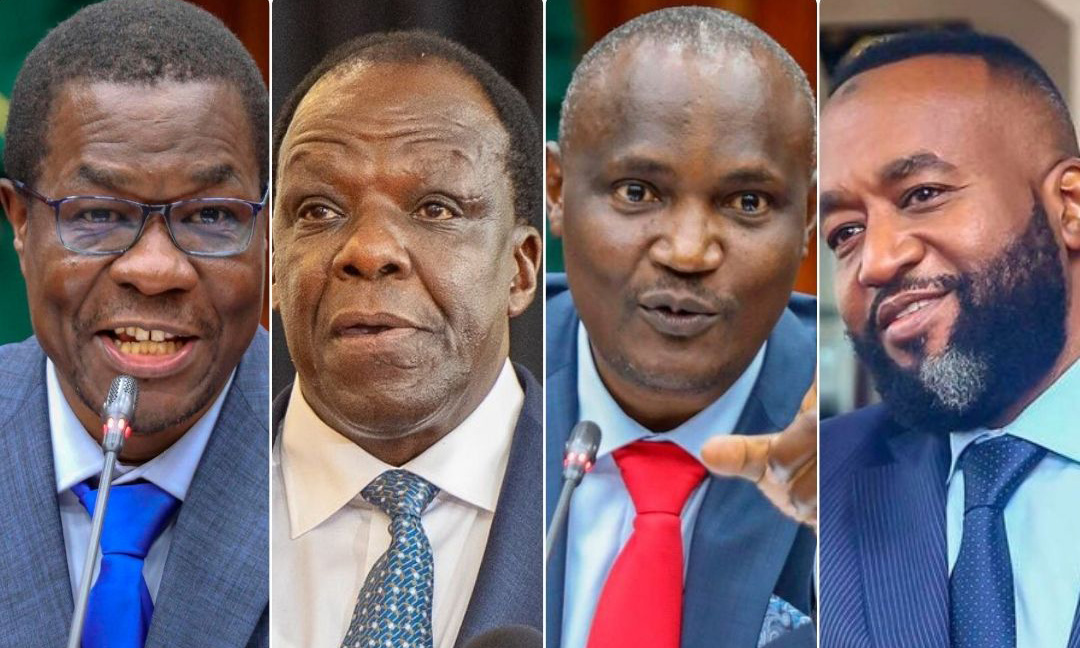
It is quite striking that what can be described as the political “orphans” of the late Raila Odinga have now become political hostages under President William Ruto’s administration.
A number of them now depend heavily on President Ruto in order to retain their positions in government, while others appear to be nearing the end of their political relevance. If indeed President Ruto made a calculated political gamble by positioning himself as the central figure they must rely on, then he may be credited for executing a highly strategic move.
What is now increasingly clear to many Kenyans is that some of the individuals once described as experts—who were appointed as Cabinet Secretaries from the Orange Democratic Movement (ODM) wing associated with Raila Odinga—may not have demonstrated the level of expertise expected of them.
The competence of Energy Cabinet Secretary Opiyo Wandayi and his counterpart in the National Treasury, John Mbadi, has recently been questioned following events such as fluctuations in fuel prices and disruptions caused by public transport strikes.
Critics argue that in these moments of crisis, both officials appeared unable to independently manage the situation, with the President stepping in to resolve matters even while abroad. This has fueled the perception that they may be overly reliant on presidential intervention to execute their duties effectively.
This raises a broader political question: when a superior consistently performs roles assigned to their subordinates, does it indicate that those roles are unnecessary—or that the subordinates are too dependent to act independently?
Before their current appointments, both officials served as Members of Parliament. However, some observers now speculate that if they were removed from office and attempted to return to active politics, they might struggle to regain their previous influence due to perceived failures in office.
In the case of John Mbadi, tensions have reportedly emerged between him and members of Raila Odinga’s family, who hold significant influence in Nyanza politics. His remarks following Raila’s passing are said to have caused friction, particularly with Raila’s sister Ruth Odinga and daughter Winnie Odinga.
As a result, some analysts argue that his political future within ODM structures may be uncertain, given the sensitivity surrounding loyalty to the late opposition leader’s legacy.
Similarly, although Opiyo Wandayi is related to Raila Odinga, critics suggest he has not been able to assert strong independent authority in his role, instead appearing politically subdued in government operations.
Ultimately, this situation reflects the nature of political appointments: they can either elevate a leader’s influence or expose their weaknesses. In such arrangements, survival often depends less on expertise and more on political loyalty and alignment with those in power.Truth be told.











Leave a comment