

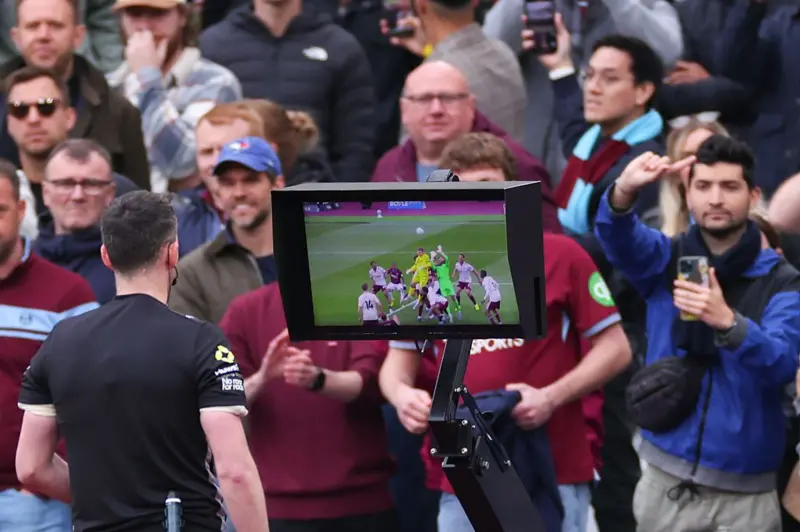
If there is one debate that has become louder than any other since the introduction of Video Assistant Referee (VAR), the video technology used to assist officiating decisions, it may be the controversy that unfolded during the Premier League match between West Ham United and Arsenal.
A late moment in the game — an equalising goal in stoppage time — was initially celebrated, only to be disallowed after a lengthy VAR review, leaving more questions than answers.
Callum Wilson scored what could have dramatically changed the title race and even the relegation battle, but West Ham’s joy was abruptly cut short after referee Chris Kavanagh overturned the goal following VAR advice from Darren England.
The incident under review involved an alleged foul on Arsenal goalkeeper David Raya in a crowded penalty area, with grappling and physical contact between multiple players.
West Ham have now requested a detailed explanation of the communication between the on-field referee and the VAR official, seeking clarity on the exact criteria used to disallow the goal. The club is also expected to request access to the audio recordings of the conversation in the interest of transparency.
On the pitch, the decision has reignited a wider debate about whether VAR improves football or undermines it. Some argue the correct laws were applied, particularly regarding a shirt pull involving Jean-Clair Todibo on Raya, while others believe the game’s flow and “spirit” are being lost in long reviews and slowed-down frame analysis.
Ultimately, the incident has raised a bigger question than the match itself: is VAR still a fair tool in modern football, or has it become a new source of controversy that can influence crucial games and even title races?
Fans, coaches, and players across the Premier League were also reminded of how football used to feel without VAR, particularly during earlier rounds of the FA Cup when the technology was not in use.
In previous FA Cup seasons, VAR only came into play from the fifth round onward, allowing supporters to experience matches with fewer interruptions.
After a season filled with controversy, delayed decisions, and confusion linked to VAR, some are now questioning whether the system is truly necessary — with many even arguing that football might be better without it.















Leave a comment