
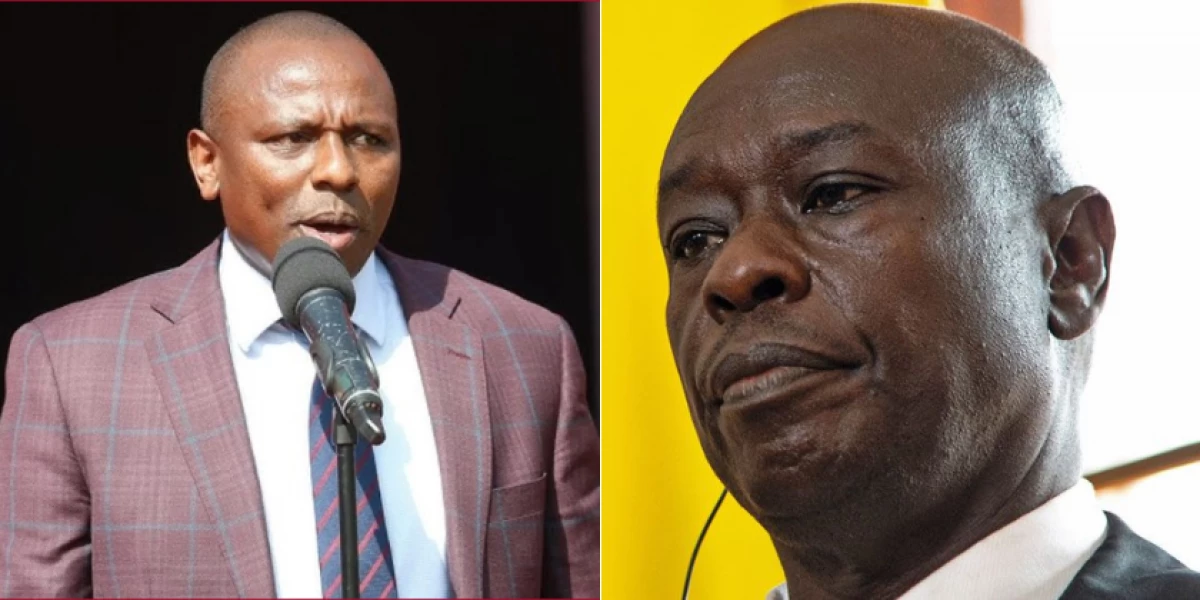
National Assembly Majority Leader Kimani Ichung’wah has made fresh claims that he once received KSh 5 million in cash from former Deputy President Rigathi Gachagua.
He made the revelation during an interview on the Obinna Show Live on April 24, 2026. According to Ichung’wah, the money was delivered to him at a Shell petrol station around 9:30 pm by one of Gachagua’s handlers named Ngotho, who arrived with a black backpack containing the cash. He said Gachagua later called him around 10:30 pm to explain that the funds were meant to help ease financial pressures from frequent fundraising events and other demands faced by parliamentarians.
Ichung’wah stated that he had been struggling with a harambee at the time and even contributed KSh 1 million from his own resources. While Gachagua framed the payment as genuine support, Ichung’wah expressed suspicion that it could have been an attempt to influence him or that the money might have come from questionable sources. He linked the incident to ongoing tensions, including his earlier accusations that Gachagua and former Education Cabinet Secretary Ezekiel Machogu had misappropriated funds meant for children’s food programs. Gachagua had previously dismissed those claims as mere propaganda.
The latest allegations add to a series of public exchanges between the two politicians, who were once allies but have since fallen out. Ichung’wah has also spoken about refusing to help Gachagua access an additional KSh 300 million from a confidential budget allocation for his office when he served as chair of the Budget and Appropriations Committee. He emphasized that he blocked such requests because he believed they were improper. As of the time of the interview, Gachagua’s side had not issued an immediate response to the specific claim about the KSh 5 million payment.
This development has sparked fresh debate about political financing, influence peddling, and accountability among leaders. Many Kenyans are following the unfolding rivalry closely, especially given the high-profile positions both men have held. Ichung’wah used the platform to stress that he would not be easily swayed or blackmailed, positioning himself as someone committed to transparent leadership.
As the story continues to generate discussion, questions remain about the full context and any potential next steps, such as formal investigations or further statements from the parties involved. The claims highlight the intense nature of political relationships in Kenya and the scrutiny that often surrounds the handling of public and private resources. Observers will be watching to see how this latest revelation affects the ongoing dynamics between Ichung’wah, Gachagua, and broader political circles.










Leave a comment