

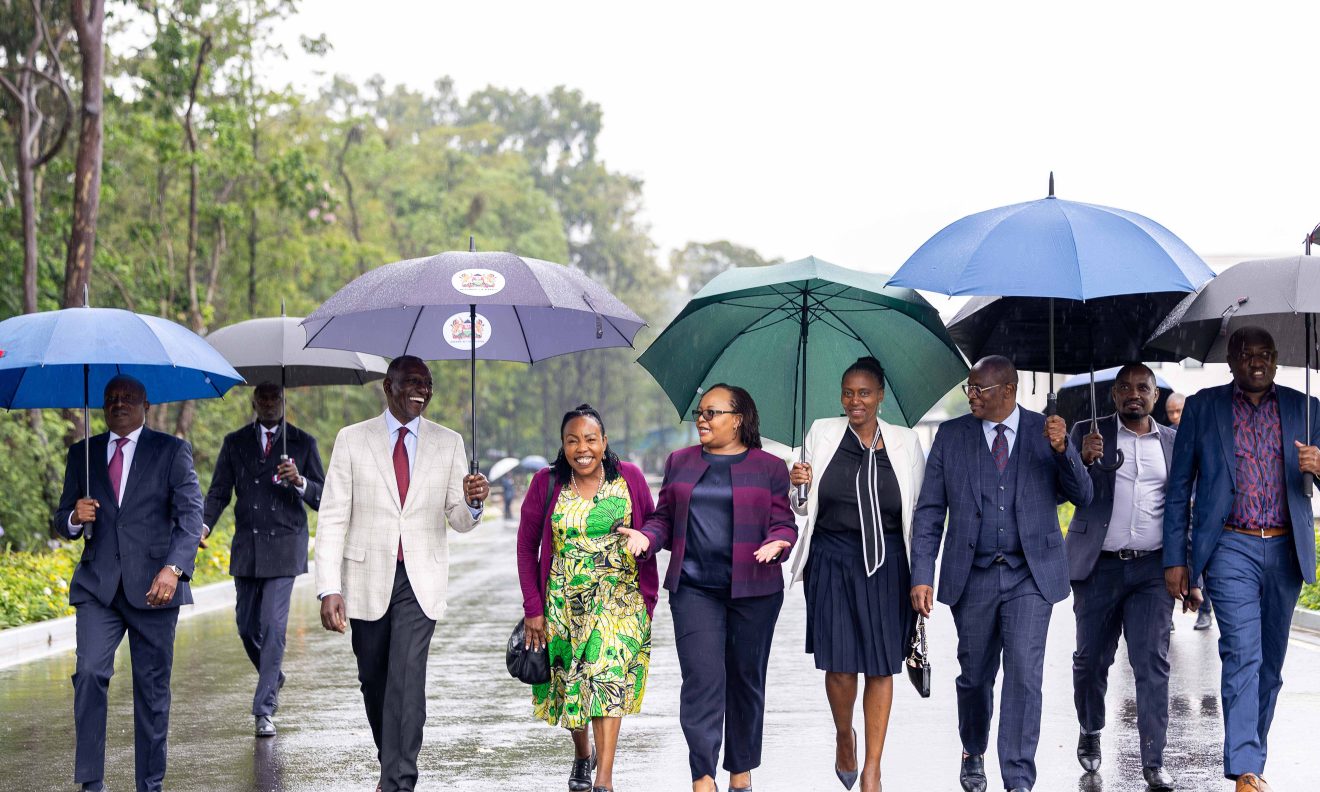
President William Ruto has made major changes to his political strategy and his team of allied politicians in the Mount Kenya region, a move aimed at strengthening support ahead of the 2027 General Election.
The move comes as former Deputy President Rigathi Gachagua continues to sharply criticize the Kenya Kwanza government in the vote-rich region.
Under the new strategy, the President is relying on a team of politicians, government technocrats, and leaders from the United Democratic Alliance to reinforce his influence.
At the center of this strategy is Deputy President Kithure Kindiki, who has emerged as a key pillar in efforts to boost government support in the region.
Prof. Kindiki is now leading what is being described as the President’s “campaign team” in Mount Kenya, combining political mobilization, messaging on government development projects, and communication strategies to rebuild public trust.
In recent public rallies, President Ruto has openly praised his deputy, signaling confidence in him and even urging citizens to affirm their support.
These remarks have fueled speculation that Prof. Kindiki could become Ruto’s running mate in the 2027 election.
Among leaders in this team are Kirinyaga Governor Anne Waiguru, National Assembly Majority Leader Kimani Ichung’wah, and Laikipia East MP Mwangi Kiunjuri, who also leads the TSP party.
Others include Deputy Head of Public Service Amos Gathecha, UDA electoral board chair Anthony Mwaura, Public Service Cabinet Secretary Geoffrey Ruku, Lands Cabinet Secretary Alice Wahome, Energy Principal Secretary Alex Wachira, and Public Health Principal Secretary Mary Muthoni.
Former Trade Cabinet Secretary Moses Kuria, now a senior economic advisor, remains influential in the President’s political strategies, especially in grassroots mobilization.
At the party level, Embu Governor Cecily Mbarire, who is also UDA’s national chairperson, oversees party operations and grassroots structures.
Other leaders supporting the effort include Mathira MP Eric Wamumbi, nominated MP Sabina Chege, Maragua MP Mary Wamaua, Murang’a Woman Representative Betty Maina, Nyeri Senator Wahome Wamatinga, Tharaka Nithi Governor Muthomi Njuki, and Meru Governor Mutuma M’Ethingia.
According to analysts, the strategy aims to align government development efforts with political messaging to attract voters, while countering opposition claims that the region has been sidelined.
In his rallies, Prof. Kindiki has emphasized that supporting President Ruto’s second term in 2027 would pave the way for a Mount Kenya presidency in 2032.
“It is easier to wait five years than ten. That is the political strategy,” he said at recent meetings.
Multimedia University lecturer Gitile Naituli says the Deputy President’s approach of toning down attacks on Gachagua is strategic, though it may not be enough to shift voter sentiment.
However, the influence of Rigathi Gachagua still looms large in the region, as he positions himself as a defender of Mount Kenya interests while criticizing the government for allegedly neglecting the area.
Meanwhile, President Ruto’s efforts come amid ongoing political talks with the Orange Democratic Movement, a development that could reshape the national political landscape.
For now, the President’s strategy appears focused on maintaining support in Mount Kenya while expanding his national influence—a balance analysts say will be crucial in his bid for re-election in 2027.










Leave a comment