

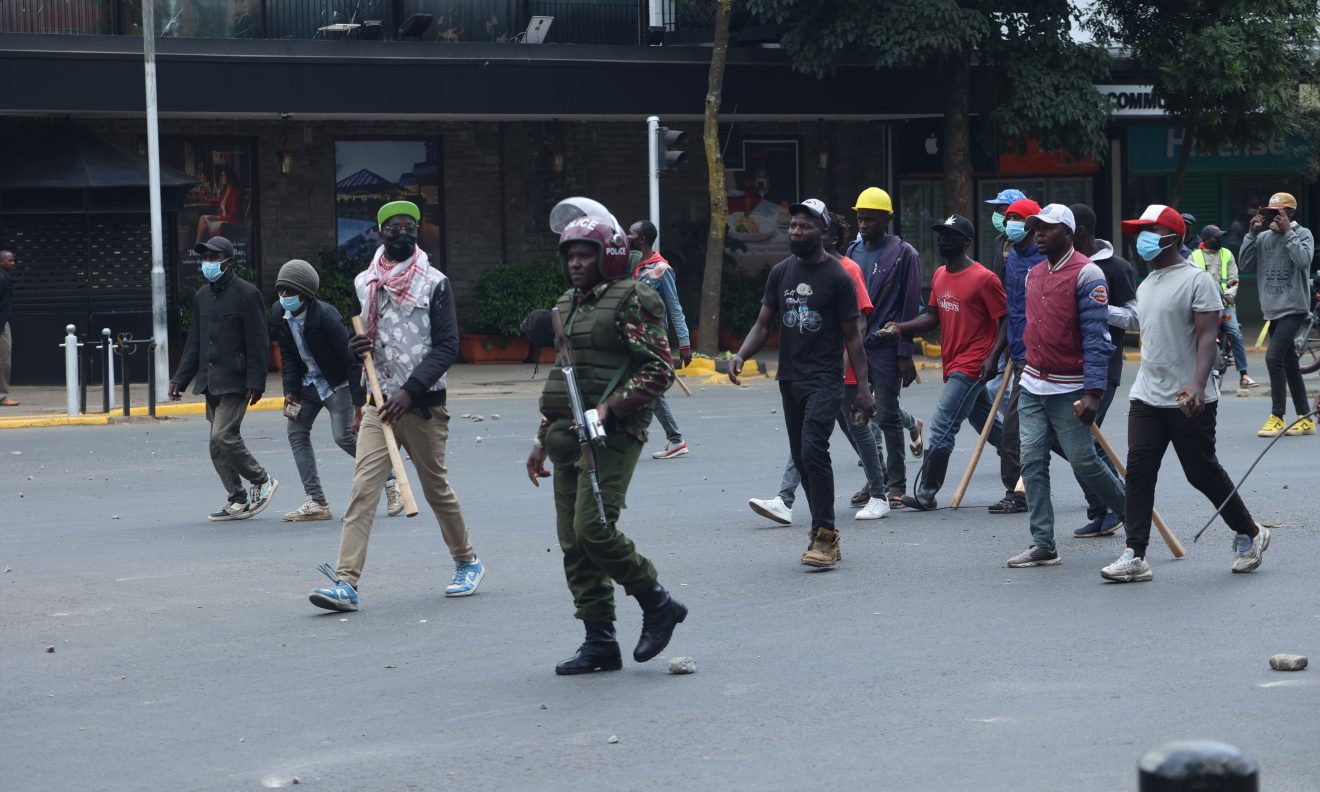
Kenya has a serious problem—the rise of dangerous gangs. It is largely a crisis of our own making, especially because many of these gangs have been created by influential individuals, politicians, and are allegedly backed by the government.
The situation has worsened to the point where politicians are forming and fully funding such groups for one purpose only: to intimidate people and signal that force remains an option whenever necessary.
When ordinary security institutions can no longer adequately protect citizens, forcing communities to form their own gangs for protection, the country is heading in a dangerous direction. What is illegal becomes normal, and what is lawful becomes ignored.
Both the government and the opposition share blame, as Kenyans have witnessed armed gangs working alongside police officers to confront demonstrators protesting government policies.
During recent by-elections in different parts of the country, people were reportedly beaten, stripped naked, and humiliated in public.
There have also been incidents where nails were driven into wooden clubs and used to puncture the tires of political rivals’ vehicles, while those rivals were attacked with crude but dangerous weapons. Wearing protective helmets at public rallies is no longer a joke—it has become a basic necessity.
Criminals have also allegedly worked with police to attack opposition politicians in churches and public meetings, with little or no action taken because their crimes are tolerated or ignored by authorities.
Kenya has become a troubling case. How did the country reach a point where police openly cooperate with criminals to harm citizens? That is often one of the first signs of a failing state. What assurance is there that such gangs are not being armed to complete criminal tasks?
Some politicians now move around under heavy protection from individuals posing as official bodyguards, despite lacking training or legal recognition. What qualifies them for the role is often their willingness to use excessive force and project intimidation.
When these gangs break the law, politicians frequently defend them. This is reflected in Kitale, where Interior Cabinet Secretary Kipchumba Murkomen and Trans-Nzoia Governor George Natembeya have publicly disagreed over how the government should handle gangs.
The minister argues that youths involved in such gangs should be dealt with firmly, while Governor Natembeya insists that using force against them violates their fundamental rights.
The painful truth is that no government has the right to kill anyone without due process of law—arrest, trial, conviction, and sentencing if found guilty.
When a government harms or kills citizens outside this legal process, it amounts to a violation of fundamental human rights and may constitute a breach of the constitution.
Likewise, no individual—whether a governor or not—has the right to create any gang operating outside the law. Doing so is participation in criminality. Whatever crimes such a group commits should be traced back to its founder. If lives are lost, responsibility follows.
Failed states overrun by gangs often begin by normalizing lawlessness, where brute force replaces justice and people survive by yielding to whoever is strongest.
In Haiti, gangs fragmented the country while much of the world looked away, until the crisis became an international emergency.
Kenya—especially the government and all actors using gangs—should not wait until insecurity becomes a national catastrophe. Solutions are needed now.
Stakeholders must show patriotism by seeking what is best for the country rather than harming it, especially as Kenya moves closer to next year’s general election.














Leave a comment