

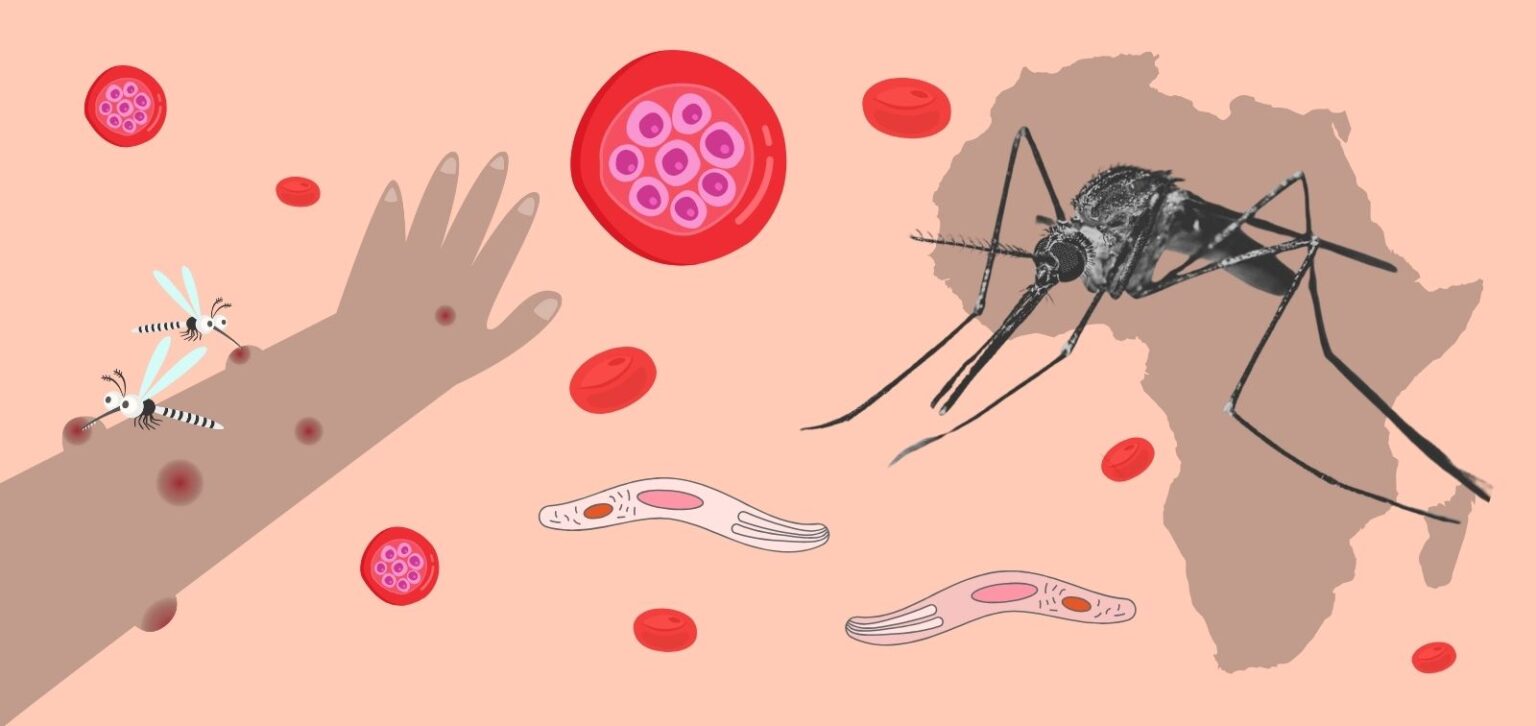
Malaria: Causes, Symptoms, Treatment, and Prevention
Overview
- Malaria (also called paludism) is a serious and potentially deadly parasitic disease.
- It is caused by protozoa of the Plasmodium genus.
- Five species infect humans:
- Plasmodium falciparum (most deadly)
- Plasmodium vivax (most widespread)
- P. malariae
- P. ovale
- P. knowlesi
- It is mainly transmitted through bites of infected female Anopheles mosquitoes.
High-Risk Groups
- Children under 5 years
- Pregnant women
- Infants
- Travellers to affected areas
- People living with HIV
Symptoms
- Appear 10–15 days after a mosquito bite (sometimes over a month later)
- Early symptoms:
- Fever
- Headache
- Chills
- Severe symptoms (if untreated within 24 hours):
- Extreme fatigue
- Seizures
- Bleeding
- Difficulty breathing
- Can lead to death
- In pregnancy:
- Premature birth
- Low birth weight
- Note: Some infected people show no symptoms
Diagnosis
- Thick blood smear (gold standard):
- Blood examined under a microscope for parasites
- Thin blood smear:
- Identifies parasite type and quantity
- PCR (molecular test):
- Detects parasite DNA
- Rapid Diagnostic Tests (RDTs):
- Detect parasite antigens
- Other methods:
- Detect enzymes or antibodies
Global Impact (2023)
- 263 million cases worldwide
- 597,000 deaths
- Africa accounts for:
- 94% of cases
- 95% of deaths
- 76% of deaths occur in children under 5
- Most affected countries:
- Nigeria
- Democratic Republic of the Congo
- Niger
- Tanzania
Transmission
- Mainly through bites of infected female Anopheles mosquitoes
- Process:
- Mosquito bites infected person → picks up parasite
- Bites healthy person → transmits parasite
- Parasites infect liver and then red blood cells
- Mosquito behavior:
- Common in rural areas
- Bite mostly from dusk to dawn
- Other transmission routes:
- Blood transfusions
- Organ transplants
- Contaminated needles
- Mother-to-child (during pregnancy or birth)
Treatment
- Depends on severity and parasite type
- Common medicines:
- Artemisinin-based therapies (for P. falciparum)
- Chloroquine (for P. vivax, where no resistance)
- Primaquine or tafenoquine (to prevent relapse)
- Treatment methods:
- Oral or intravenous medication
- Severe cases:
- Require intensive care and monitoring
Prevention
- Focus on avoiding mosquito bites (vector control):
- Use insecticide-treated bed nets
- Install window screens
- Apply strong mosquito repellents
- Use indoor sprays/fumigation
- Wear long-sleeved clothing
- Travellers should:
- Take preventive (prophylactic) medication before travel











Leave a comment